1945
– 1950
Establishment of the Supreme Fiscal Court in July 1945
Bavaria retains Supreme Tax Court

Copyright: Federal Fiscal Court
Germany's surrender on May 8, 1945, marked the end of the history of the Reich Fiscal Court. The president of the Reich Fiscal Court was removed from office in accordance with the provisions of occupation law. Initially, there was no longer any uniform financial jurisdiction. In discussions between the American military government and the Bavarian state government, it was decided to establish a supreme court for tax law. The Free State of Bavaria continued the tradition of the old Reich Fiscal Court and maintained its organization in the form of the Supreme Fiscal Court, limiting its jurisdiction to taxes that fell within Bavaria's competence and territorial sovereignty.
Heinrich Schmittmann becomes president of the Supreme Fiscal Court
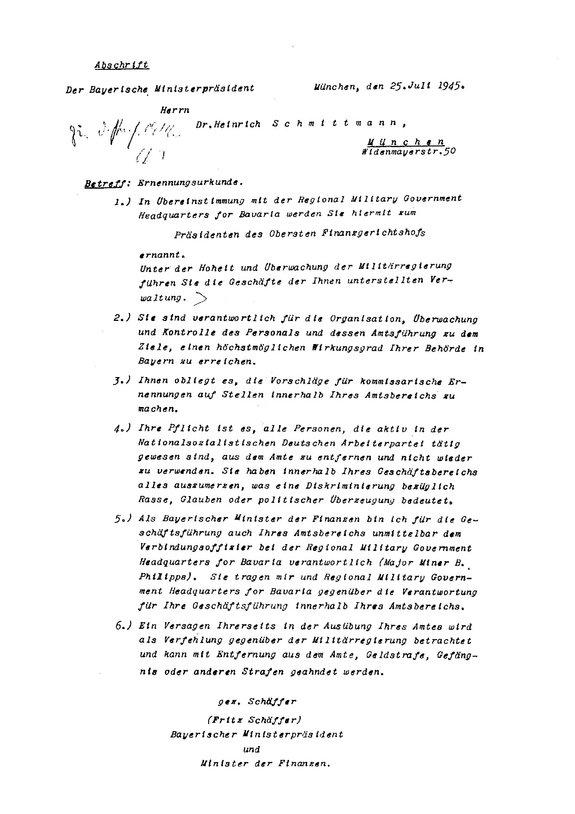
On July 25, 1945, the former Senat President of the Reich Fiscal Court, Dr. Heinrich Schmittmann, was appointed president of the Supreme Fiscal Court based in Munich and tasked with the so-called denazification process. Persons in judicial and non-judicial service who were members of the NSDAP were dismissed.

Copyright: Federal Fiscal Court
Copyright: Federal Fiscal Court
The Supreme Fiscal Court only has jurisdiction over the American zone
The Supreme Fiscal Court was initially only responsible for Bavaria, but from 1947 onwards it was responsible for the entire American zone. This created the conditions for the reestablishment of a supreme court for tax and customs matters as soon as possible.
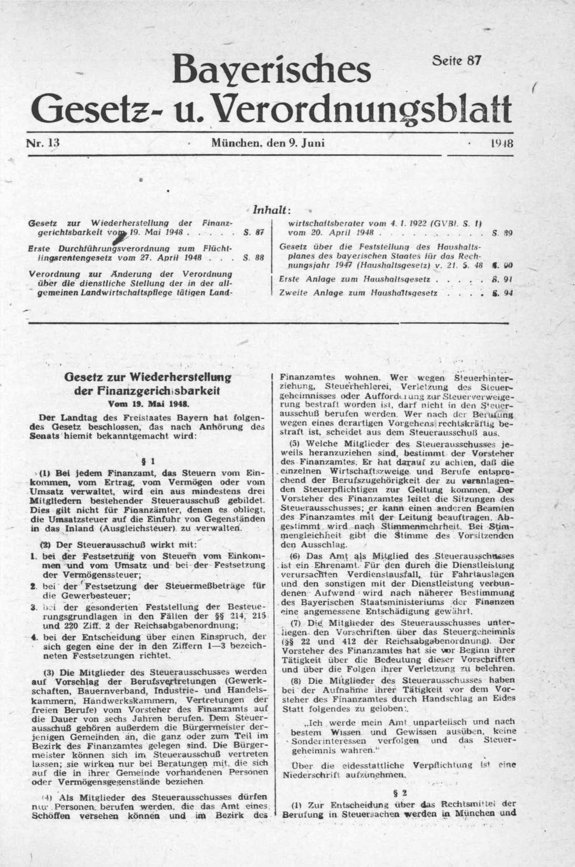
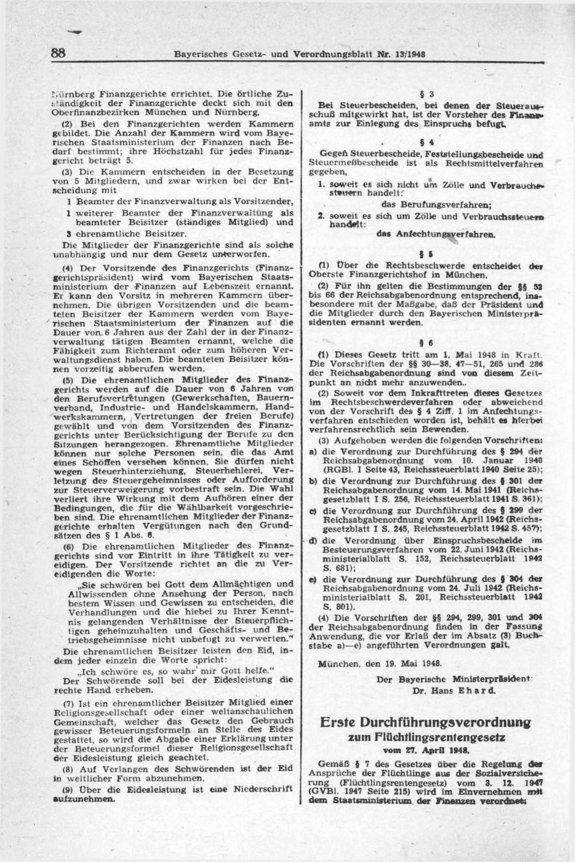
In contrast, there was no supreme tax court in the British, French, and Soviet zones. In the British zone, the then headquarters of the tax administration, based in Hamburg, had to decide as the court of appeal. The tax court system in the French zone corresponded to that of the Reich Tax Code of 1931. In the Soviet zone, too, the Reich Tax Code initially continued to apply. Taxes and duties remained exempt from judicial review in the German Democratic Republic, which existed from 1949 to 1990.
Copyright: Bavarian Law and Ordinance Gazette, 1948, No. 13, p. 87
Copyright: Bavarian Law and Ordinance Gazette, 1948, No. 13, p. 88
Dismissal, denazification, and reinstatement of former NSDAP members
By April 1949, a total of 42 people had been dismissed for their membership in the NSDAP, including 25 judges. That was more than half of the 79 members of the former Reich Fiscal Court.
Before the Federal Fiscal Court was established, so-called “non-affiliated persons,” those granted amnesty, and “followers” were reinstated, provided they had not reached the age limit. No more than two former NSDAP members were allowed to serve on a senate. A former member of the NSDAP was not allowed to become chairman of a senate.
End of the Supreme Fiscal Court's activities
The activities of the Supreme Fiscal Court ended on August 31, 1950. The processing of pending tax matters was transferred to the newly established Federal Fiscal Court with effect from September 1, 1950.
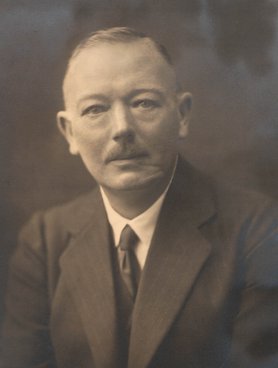
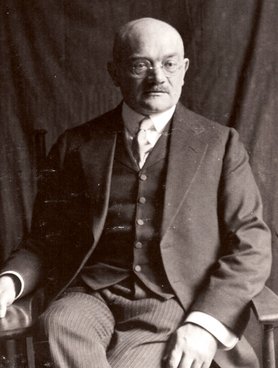
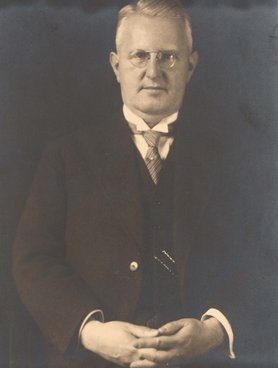
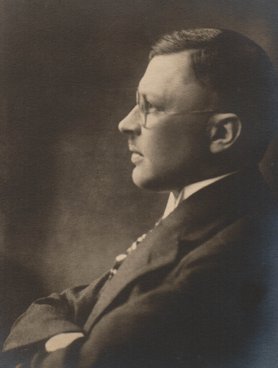
Some of the judges in service from 1945 to 1950
From 1945 to 1950, 30 judges served on the Supreme Fiscal Court. With the exception of one judge, all of them had previously served on the Reich Fiscal Court. Twelve of them became judges on the Federal Fiscal Court on September 1, 1950.